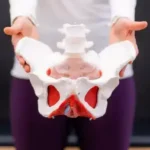
A breech baby is one positioned feet- or bottom-down instead of the ideal head-down (cephalic) position for birth. While some babies turn on their own, others remain breech as the due date approaches. Roughly 3–4% of babies are breech at term, and care providers often recommend planned cesarean birth or an external cephalic version (ECV)—a manual procedure used to try and turn the baby from the outside. Although ECV has a moderate success rate, it isn’t always comfortable and carries a small risk of complications.
At Acumamas, we use a combination of acupuncture and moxibustion to offer support for breech— its non-invasive, calming, and backed by growing clinical evidence.
What is moxibustion?
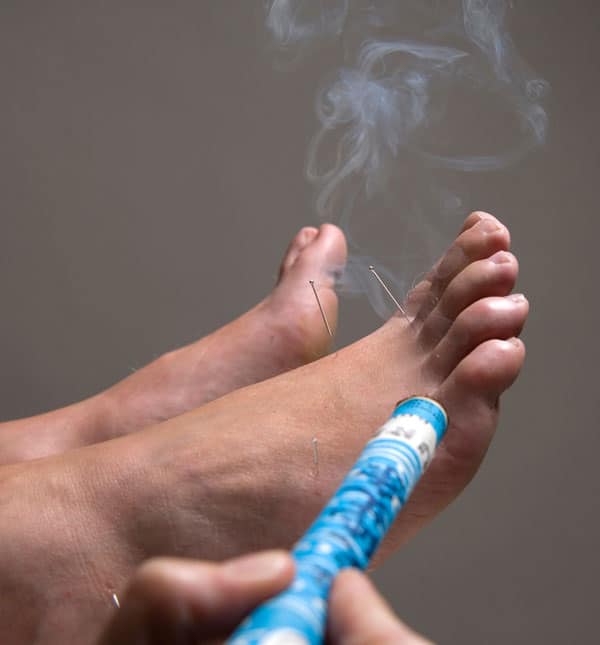
Moxibustion is a traditional therapy rooted in Traditional Chinese Medicine (TCM) that involves burning a herb called mugwort (Artemisia vulgaris) near specific acupuncture points to warm the area and stimulate circulation. For breech babies, practitioners focus on the Bladder 67 (Zhiyin) point—located near the outer corner of the little toe.
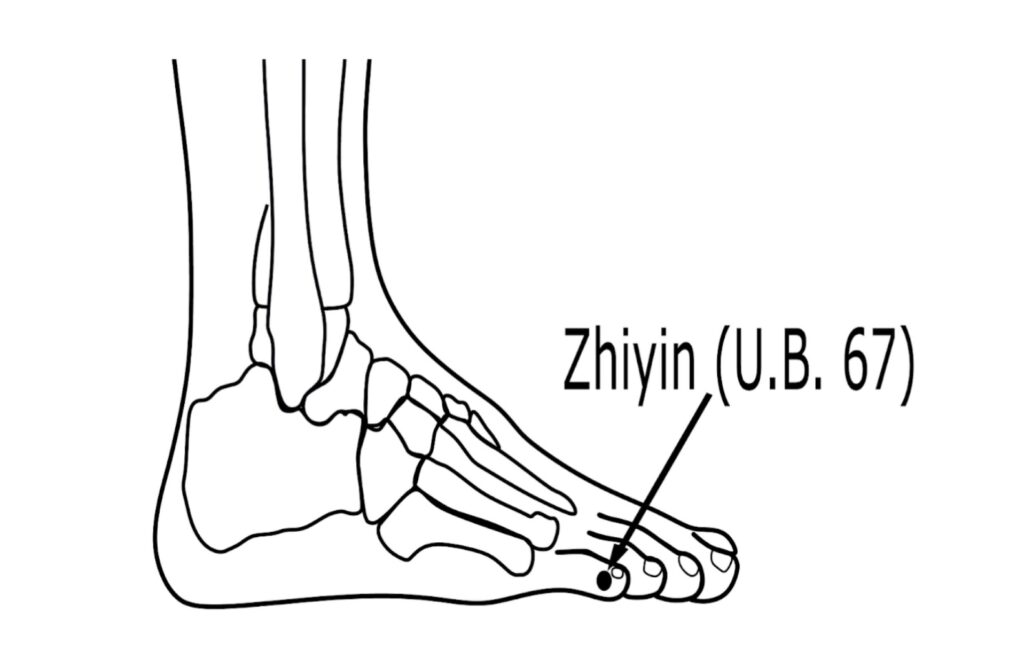
According to both traditional theory and modern research, stimulating this point helps relax the uterus and may increase fetal movement by influencing the release of prostaglandins and oxytocin—hormones that play a key role in uterine activity and baby positioning.
The treatment is often deeply relaxing and easy to perform, even at home. When moxibustion is initiated around 34 to 36 weeks, the baby still has enough space to move, and the hormonal and mechanical signals from the treatment may support spontaneous turning.
What the research shows
Several high-quality studies and reviews have investigated the effectiveness of moxibustion for breech babies:
- A 2021 systematic review of 16 randomized controlled trials found that moxibustion significantly increased the chance of head-down presentation at birth compared to standard care. The relative risk of cephalic presentation was 1.39, and this rose to 1.53 when moxibustion was combined with acupuncture.
- A 2023 Cochrane Review reinforced these findings, noting that moxibustion administered before 37 weeks reduced the number of breech presentations and the need for labor induction or cesarean due to baby position.
- Additional clinical observations show that families who begin moxa around 34–35 weeks often report increased fetal movement and a greater chance of baby turning head-down naturally—especially when combined with positional exercises, relaxation techniques, and coordinated care with a midwife or obstetrician.
While research is ongoing, the overall consensus points to moxibustion as a safe and promising therapy, especially when used early and in a supported setting.
Your session at Acumamas: what to expect
At Acumamas Pregnancy Acupuncture, breech support sessions are designed to be calm, respectful, and tailored to your needs.
You’ll begin with a gentle intake, where your practitioner will learn more about your pregnancy, medical history, and any previous treatments. You’ll then lie comfortably—usually on your side—while the practitioner warms the Bladder 67 point using a slowly smoldering moxa stick, held several centimeters away from the skin to create a soothing, radiant warmth. The treatment may be repeated on both feet, and your comfort is continuously monitored.
After moxibustion, your session may also include acupuncture points such as Spleen 6, Stomach 36, and Bladder 60, which are selected for their ability to calm the nervous system, relax the uterus, and encourage optimal fetal positioning.
Home care and self-moxa
Your practitioner will teach you or your support person how to safely continue home moxibustion for 10–14 days. This empowerment piece is key: many families enjoy being able to participate directly in their care with a simple, effective technique they can use at home.
We also recommend pairing your treatments with other techniques known to assist baby’s movement, such as spinning babies exercises, pelvic tilts, or gentle prenatal yoga—which you can learn more about through your Acumamas team or your prenatal educator.
The role of acupuncture in breech support
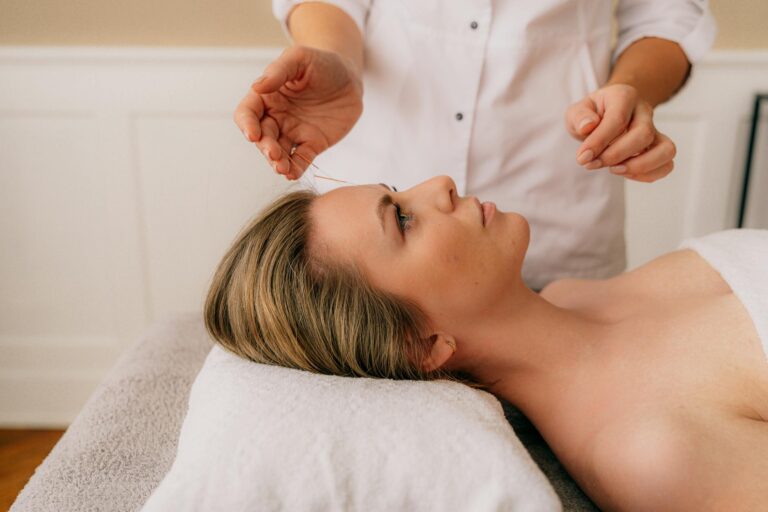
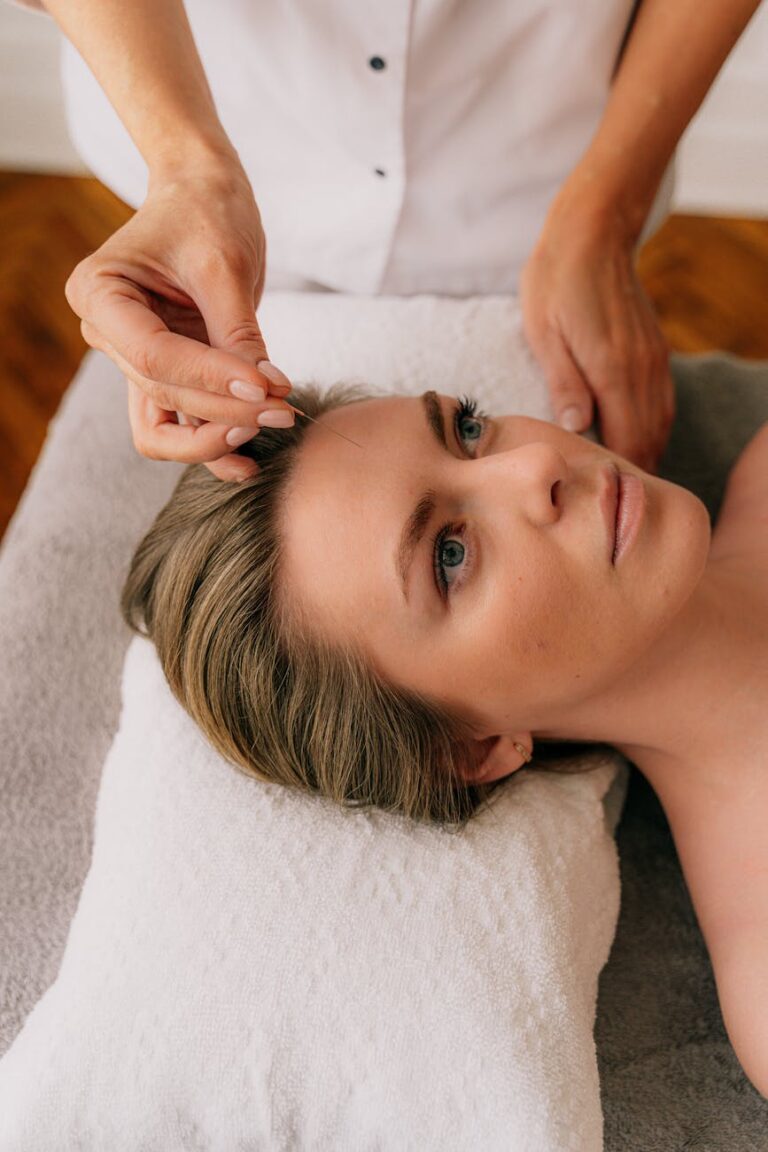
While moxibustion takes center stage in breech protocols, acupuncture plays a valuable supportive role.
Studies suggest that acupuncture can:
- Stimulate uterine and pelvic blood flow
- Reduce maternal stress, which may affect uterine tone
- Create hormonal shifts that support fetal movement
- Improve relaxation and emotional readiness for birth
The synergistic use of acupuncture and moxibustion appears to yield better outcomes than either therapy alone. We often recommend four to six sessions, beginning between 32 and 36 weeks, for best results.
Acupuncture is also used before and after external cephalic version (ECV), as it may improve the success rate by encouraging a more relaxed and responsive uterine environment.
How this complements medical care
Moxibustion and acupuncture are not substitutes for conventional medical care. Rather, they’re gentle, collaborative tools that work alongside your birth team’s plan.
We regularly coordinate care with:
- Midwives and OBs, especially when ECV is planned
- Doulas, to support positioning and comfort
- Prenatal physiotherapists, when addressing pelvic alignment or uterine tone
If your provider has advised caution with ECV—due to placenta previa, low fluid, or other risk factors—moxa may still be an option worth exploring. Our practitioners always consult your medical history to ensure appropriateness.
Is it safe?
Moxibustion is considered low-risk when performed by a trained professional or with proper instruction. At Acumamas, we take every precaution to ensure a safe experience, including:
- Avoiding treatment for those with high-risk conditions such as preterm labor, placenta previa, or preeclampsia
- Offering smokeless moxa for those with asthma or sensitivity to smoke
- Ensuring proper distance and supervision to avoid burns or overheating
- Providing guidance for ventilation when using moxa at home
We also respect your comfort and preferences throughout the process. If moxa isn’t a good fit, we can offer pregnancy acupuncture sessions that support relaxation and uterine balance without heat.
A gentle path forward
Discovering a breech position can feel overwhelming—but it doesn’t mean you’re out of options. With warmth, skill, and respect, our team at Acumamas is here to walk beside you.
Whether you’re hoping to avoid ECV, preparing for it, or simply exploring ways to encourage baby’s natural movement, acupuncture and moxibustion can be powerful tools in your birth preparation toolkit.
If you’re between 32 and 36 weeks pregnant and curious about breech support, we invite to book a consultation or visit our pregnancy services page to learn more.